

Birmingham City University Game Design
Universities in the UK are rightly regarded as the best in the world. The oldest universities (such as Oxford and Cambridge) do not lose their relevance due to the introduction of advanced methods and technologies, and many young ones learn from those centuries of experience, adhering to the quality mark of British higher education. 18 UK universities are in the Top 100 educational institutions of the world[0]. Such a reputation makes British graduates in high demand in the international labor market. To maintain high standards, UK universities are regularly evaluated by The Quality Assurance Agency for Higher Education (QAA).
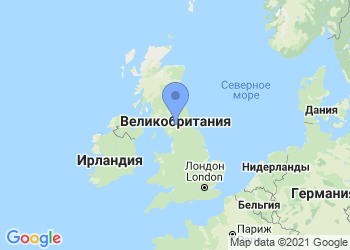
United Kingdom - General information
| Region | British Islands |
| Capital | London |
| Language | English, Welsh |
| Currency | Pound Sterling |
| Population | 63,181,775 |
| Students | 2,600,000 |
| Foreigner students | 16.4% |
Statistics - Rankings
| Subject | |
|---|---|
| Arts and Humanities | 2 |
| Engineering and Technology | 2 |
| Life Sciences and Medicine | 2 |
| Natural Science | 2 |
| Social Sciences and Management | 2 |
| Mathematics | 6 |
| Physics | 2 |
| Chemistry | 4 |
| Computer Science | 3 |
| Economics & Business | 2 |
Statistics - Education
| Indicator | |
|---|---|
| Popularity rating in the world | 2 |
| Ranking of universities in the world | 2 |
| Academic Reputation | 2 |
| Employer Reputation | 2 |
| Quality of teaching | 2 |
| International Faculty | 1 |
| International Students | 2 |
| Citations per Faculty | 2 |
Statistics - Universities
| Universities in top 100 | 16 |
| Universities in top 200 | 26 |
| Universities in top 500 | 49 |
| Universities in top 1000 | 76 |
| Universities in top 5000 | 139 |
Top universities in the UK
Information is exploratory. For accurate information, refer to the official website of the school.
| Title | City | Bachelor | Master | |||
|---|---|---|---|---|---|---|
| 4 | 1 | University of Cambridge | Cambridge | 24,831 USD | 24,831 USD | |
| 6 | 2 | University of Oxford | Oxford | 21,693 USD | 21,693 USD | |
| 9 | 3 | University College London | London | 25,237 USD | 24,948 USD | |
| 15 | 4 | Imperial College London | London | 33,465 USD | 34,777 USD | |
| 26 | 5 | The University of Edinburgh | Edinburgh | 20,801 USD | 16,076 USD | |
| 27 | 6 | The University of Manchester | Manchester | 26,247 USD | 23,622 USD | |
| 28 | 7 | King's College London | London | 19,948 USD | 21,628 USD | |
| 38 | 8 | University of Bristol | Bristol | 20,735 USD | 20,735 USD | |
| 51 | 9 | London School of Economics and Political Science — University of London | London | 22,310 USD | 30,184 USD | |
| 54 | 10 | University of Warwick | Coventry | 26,483 USD | 29,318 USD | |
| 71 | 11 | The University of Glasgow | Glasgow | 18,635 USD | 20,013 USD | |
| 76 | 12 | The University of Nottingham | Nottingham | 26,339 USD | 17,717 USD | |
| 83 | 13 | The University of Birmingham | Birmingham | 19,095 USD | 19,095 USD | |
| 88 | 14 | University of Sheffield | Sheffield | 23,130 USD | 23,130 USD | |
| 89 | 15 | University of Southampton | Southampton | 21,069 USD | 24,344 USD | |
| 92 | 16 | University of Leeds | Leeds | 20,341 USD | 20,670 USD | |
| 117 | 17 | University of Liverpool | Liverpool | 15,567 USD | 16,011 USD | |
| 120 | 18 | Queen Mary University of London | London | 16,733 USD | 18,898 USD | |
| 122 | 19 | Durham University | Durham | 19,554 USD | 24,803 USD | |
| 131 | 20 | Cardiff University | Cardiff | 22,966 USD | 22,966 USD |
Advantages of UK universities
- Top-notch facilities. First of all, British universities impress with their outstanding architecture. However, despite the outward antiquity, many UK universities are equipped with vast modern libraries, research laboratories, and even their own museums. The University of Oxford, for example, founded the world's first university museum — Ashmolean Museum of Art and Archeology [1], and the University of Manchester has its own observatory with several radio telescopes.
- Unique traditions. British universities honour long-standing traditions. So, at the beginning of each academic year, universities hold a Fresher's Week, during which a lot of activities and events are laid on the campus for the newcomers. Here one can encounter quite unique customs. For example, at the University of St Andrews, every freshman is assigned to academic "parents" — students in their third or fourth year of study. During the Raisin Weekend in November, a student visits a tea party thrown by the "mother", then a pub-crawl led by the "father". The fun ends with a shaving foam fight.
- Recognition of UK education. QS rankings [2], The Times Higher Education (THE) [3] and Shanghai Rankings (ARWU) [4] annually include up to 18 UK universities into the 100 world's best universities. As a result, the United Kingdom is one of the most popular study destinations, second only to the United States[5], and a British degree is perceived as a quality mark for employers all over the world.
- Overall satisfaction. According to the National Student Survey (NSS) 2018, British students are more than satisfied with their course quality. The highest scoring universities are the University of St Andrews — 94%, University of Buckingham, Conservatoire for Dance and Drama, The London Institute of Banking & Finance — 91%. Moreover, the last universities on the list of those participating also prove good results: London School of Economics and Political Science, Ravensbourne, Royal Academy of Music — 71%, Glasgow School of Art — 67%[6].
Disadvantages of UK universities
- Compulsory preparation before university. To meet the admission requirements for undergraduate programmes, international students must undergo training within one of the preparatory courses: A-Level, International Baccalaureate or Foundation programme. It takes both time (an additional year of training before entering Bachelor's) and finance (preparatory programmes may be even more expensive than undergraduate or graduate ones).
- Higher cost of study for non-EU students. In the UK, international students have to spend 2-4 times more on tuition than UK or EU citizens, who are required to pay up to 12,497 USD [7] and enabled to use postgraduate loans[8]. Additional expenses do arise from the need to take one of the compulsory preparatory courses before entering a university: A-Level, IB or Foundation. These may be even more expensive than undergraduate or graduate ones
- Narrow specialization. Unlike America, education in Britain is characterized by narrow specialization. Students are to choose 3-4 specific subjects already in high school with the aim of further admission to a university programme in the corresponding field. University courses are also based on one subject area, without dividing disciplines into majors and minors. Such a system places significant restrictions on students' mobility, making them set their career preferences in advance.
Admission requirements at UK universities
| Type of study | Age | Duration | Min. cost per year | Avg. cost per year | Min. language level | Exam |
|---|---|---|---|---|---|---|
| Apprenticeship | 16+ | 1-6 years | Free | Free | B1 | IELTS 5.0 |
| Foundation | 16+ | 1 year | 10,808 USD/year | 18,914 USD/year | B1 | IELTS 5.0 |
| Undergraduate | 17+ | 3 years | 13,510 USD/year | 32,424 USD/year | B2 | IELTS 6.0 |
| Medical school | 17+ | 5-6 years | 29,722 USD/year | 41,881 USD/year | C1 | IELTS 6.5 |
| Master's | 20+ | 1 year | 13,510 USD/year | 22,967 USD/year | C1 | IELTS 6.5 |
| Doctorate | 21+ | 3 years | 20,265 USD/year | 27,020 USD/year | C1 | IELTS 7.0 |
These are the approximate costs for overseas students. UK and EU citizens are subject to a lower 'home' rate which depends on the location of the university. The maximum fees for each part of the UK are the following:
| Part of the UK | Max. undergraduate fee for EU citizens |
|---|---|
| England | 12,497 USD |
| Wales | 12,159 USD |
| Scotland | Free |
| Northern Ireland | 5,620 USD |
In Britain students apply for preparatory and undegraduate programmes through UCAS Universities and Colleges Admissions Service . Master's and PhD applicants submit documents through the universities' websites. A complete list of admission requirements is determined by each educational institution. Usually, universities independently assess student's qualifications based on the certified translations, but in some cases a special statement of comparability with British equivalents from NARIC should be obtained Fee: 49.68 USD + VAT* (59.54 USD) .
For international students studying a preparatory course is mandatory. The programmes available are Foundation, IB and A-Level. For a one-year Foundation, a certificate of complete secondary education corresponding to 11 or 12 years of study is required. Two-year programmes (IB and A-Level) can be entered after 9-10 years of school. The language criterion here is usually lower than for bachelor's, (IELTS 5.0-5.5).
For Bachelor's an applicant should have:
- A certificate of secondary education;
- A preparatory programme completed;
- Minimum language proficiency (IELTS 6.0).
The requirements for Master's programmes are:
- A bachelor's degree in the relevant field (GPA >60%);
- Minimum language proficiency (IELTS 6.5 also TOEFL, Cambridge Assessment, PTE Academic ).
- A research proposal for research programmes (MPhil or MRes) ;
- A graduate entry test score GRE or GMAT;
- A motivational letter;
- A resume / CV;
- References from teachers / employers;
- An entrance test or an interview may be required.
For PhD programmes a student may need:
- A master's degree (merit / distinction — GPA >60%) or its equivalent in the relevant field;
- A bachelor's degree with honours in the relevant field;
- Minimum language proficiency (IELTS 7.0 also TOEFL, Cambridge Assessment, PTE Academic );
- A research proposal;
- A personal statement;
- References from teachers / employers;
- Attending an interview;
- Research experience, academic achievements, number of publications and extracurricular activities may be relevant as well.
Read more
Types of educational institutions in the UK
The main types of educational institutions in the UK are:
- School (state / public / independent) and Sixth Form College. Traditionally, British schools and Sixth Form colleges provide secondary education. However, they also offer a wide range of special programmes, including preparatory A level, International Baccalaureate and professional BTEC within further education .
- General Further Education (FE) College. FE colleges offer students National Vocational Qualifications (NVQs) at levels 1-7 of the RQF, as well as HNC Higher National Certificate , HND Higher National Diploma , PGCE Postgraduate Certificate of Education , Foundation degree, and Apprenticeships. These are designed for students wishing to gain practical skills and move on to employment, although they can also progress to undergraduate studies.
- University. UK universities are large educational institutions awarding all types of degrees: bachelor's, master's and PhD. The University status is protected by UK law, although eligibility requirements vary between the constituent countries of the UK. Unlike vocational colleges, universities are more research-focused.
- University College not equal to the University College London having a university status . This is a small educational institution, which is usually part of a larger university. The title is also protected by law, but not equivalent to the university one. University colleges hold taught degree awarding powers.
All universities, university colleges, colleges of the University of London and some FE colleges are included in the list of recognized bodies. Degree courses may also be provided at listed bodies, but the degrees are still validated by a recognized body.
British universities can be divided by age and location. The groups are characterized by ambiguous definitions. Nevertheless, in most general terms, one can distinguish:
- Old universities are educational institutions which held University status prior to 1992.
- New universities. Polytechnics, colleges and institutes of higher education endowed with University status by the government under the Further and Higher Education Act of 1992 or later: London Metropolitan University, University of Plymouth, Coventry University. This group does not include universities that have acquired this status since 1992 via royal charter, for example, Imperial College (1907), Cardiff University (1883).
Old universities include:
- Ancient universities are the six oldest British universities, founded before 1800: English Oxford and Cambridge; Scottish University of St Andrews (1413), University of Glasgow (1451), University of Aberdeen (1495), University of Edinburgh (1583). Historically, the group also includes the University of Dublin, Ireland (1592).
- Red brick universities иногда civic universities . Initially, it was the name of university colleges, founded in the late 19th and early 20th centuries in provincial cities, which later became universities. Now the term red brick refers to any university that was granted University status between 1800 and 1992: University of Liverpool (1881), University of Birmingham (1825), University of Bristol (1876), University of Manchester (2004 formed by merger between several older institutions ), etc.
Depending on structure, British universities can be unitary and collegiate. In the first case, a central university supervises all teaching and services provided by its educational units. The majority of UK universities adhere to this system. The first unitary university in England was the University of Birmingham. In collegiate universities, functions are distributed between a central university and a number of constituent colleges, for example, University of Oxford, University of Cambridge, Lancaster University, Roehampton University, University of London.
Colleges in the UK
There are two types of colleges in the UK that are not tertiary education providers:
- Sixth form colleges (SFC) provide advanced school-level qualifications for students aged 16 to 19 enabling them to progress to university or higher-level vocational education. The programmes taught at SFCs are A-levels, Business and Technology Education Council (BTEC), the International Baccalaureate Diploma (IB), or GCSE. examinations.
- Further Education (FE) Colleges offer technical and professional education and training for students of any age. Unlike the Sixth Form, FE colleges offer qualifications up to level 7 RQF.
Colleges also provide Apprenticeships, which mean full-time training at the workplace with a rare attendance of classes. A student, called apprentice, earns a wage and gets holiday pay. Overseas students, however, are rarely enrolled in such programmes, as this requires getting a work visa.
There are 294 colleges in England. In total, they educate and train more than 2 million people[9]. On average, every UK college has 672 non-UK students. Among them, the most popular level of study is Level 3 RQF[10].
Public and private universities
All UK universities are formally independent bodies. Unlike in America and other European countries, there are no government-owned universities.
However, almost all UK universities are public, which means that they receive part of the funds (30-90%) from the government. At the same time, they are largely autonomous and independently decide on the additional ways of generating income. Public universities vary in size from a few hundred to over 30000 students. Some are integrated into a city's infrastructure, others have their own campuses.
There are only 5 private universities in the UK, which are not subsidized by the government: the charitable University of Buckingham and Regent's University London, and the profit-making University of Law, BPP University and Arden University. The majority tend to focus on subject areas such as Business, Management, and Law.
Private universities are believed to have more freedom and opportunities to support healthy competition and create programmes relevant to the needs of employers. Traditional public universities provide a general research-focused education with scientific research being a prerequisite for obtaining funding from the government, but having little relevance to the workplace[11]. Another advantage of private universities is individual pastoral care цшершт smaller student groups.
Groups and associations of universities
In Britain, there are three formal representative bodies for higher education providers:
- Universities UK. An association designed to promote interests of British universities, university colleges and higher education colleges. Currently, it brings together 136 educational institutions. Scottish members of Universities UK make up an additional group, [%20http://www.universities-scotland.ac.uk/ Universities Scotland].
- GuildHE. A membership organization that includes private and public educational institutions of all types, including specialist colleges[12]. GuildHE encourages diversity, inclusive education, innovative approaches to research, healthy competition, and also provides a variety of opportunities for students and graduate employers[13].
- Association of Colleges. A not-for-profit organization being the national voice for further education, sixth form, tertiary and specialist colleges in England. AoC supports students at all levels, influences the government's policy in the field of further education, and also represents UK colleges at the international level[14].
There are also mission groupings with defined membership. The largest of them are:
- Russell Group. A group of 24 leading research universities in the UK, which receive about 68% of research grant and contract income in the country. In total, more than 30% of non-UK students study here. Nearly ⅔ doctorates of the United Kingdom are awarded at Russel group universities[15]. Sometimes it is considered an analogue of the American Ivy League[16].
- MillionPlus. A coalition of 20 universities founded or granted university status after 1992. The organization MillionPlus is involved in the political debate about the role of of the so-called new (modern) universities in the UK education system and their contribution to the economy and society.
- University Alliance. An association of British universities which was formed in 2006 by the country's technical and professional universities. It was originally called the Alliance of Non-Aligned Universities. Its membership includes 13 institutions aiming at the development of technical and vocational education. University Alliance also offers funding for PhD students, including those from other countries[17].
- Independent Higher Education. A national representative body for private non-profit education providers in the UK (universities, colleges, institutes, art academies). The goal of Independent HE is to promote, support and expand the independent sector of tertiary education.
Free universities in the UK
There are no free universities in the UK. Moreover, international students (except for the EU citizens) have to pay several times more than the British. But there are many funding opportunities for both home (UK/EU) and overseas students provided by the UK government, individual universities, organizations, and foundations.
Read more
Interesting facts about UK universities
- Every year, about 500000 foreign students enter English universities. Thus, each student is surrounded by representatives from more than 200 countries[18].
- In British colleges, the average age of students is 29 years old. At the same time, 92000 students are aged 60+[19].
- Students cannot apply to the University of Oxford and Cambridge in the same year[20].
- University of Birmingham is one of the most active participants of Erasmus project. Annually it welcomes over 700 students to its campus within more than 225 student exchange agreements with partner universities all over the world[21].
- Former CIA employee Edward Snowden was elected as the rector of the University of Glasgow with 51% of the total votes. He served a term of three years. It is reported that a famous American whistleblower agreed to stand as a candidate after being contacted by a group of students. As a matter of fact, Glasgow students have a history of electing rectors as political statements[22].
- Central Saint Martins College of Art and Design (CSM) is one of the oldest design universities in the world and the first of this kind in Britain. Among the alumni of the school are many notable fashion designers, including John Galliano, Stella McCartney, Alexander McQueen, and Riccardo Tisci[23].
Pictures of UK universities


Last updated:
Birmingham City University Game Design
Source: https://www.unipage.net/en/universities_uk
Posted by: isaacschumake.blogspot.com
0 Response to "Birmingham City University Game Design"
Post a Comment